

The Executive Chairman of the Economic and Financial Crimes Commission (EFCC), Mr Ola Olukoyede, has called on universities across the country to urgently integrate Artificial Intelligence (AI) into their ethical and financial management systems as a transformative tool to combat corruption, enhance accountability, and restore public trust.
Olukoyede made the call in Kano on Tuesday, April 28, 2026, in a keynote address at the opening ceremony of the 8th Biennial Conference of the Committee of Pro-Chancellors of State Universities in Nigeria (COPSUN).
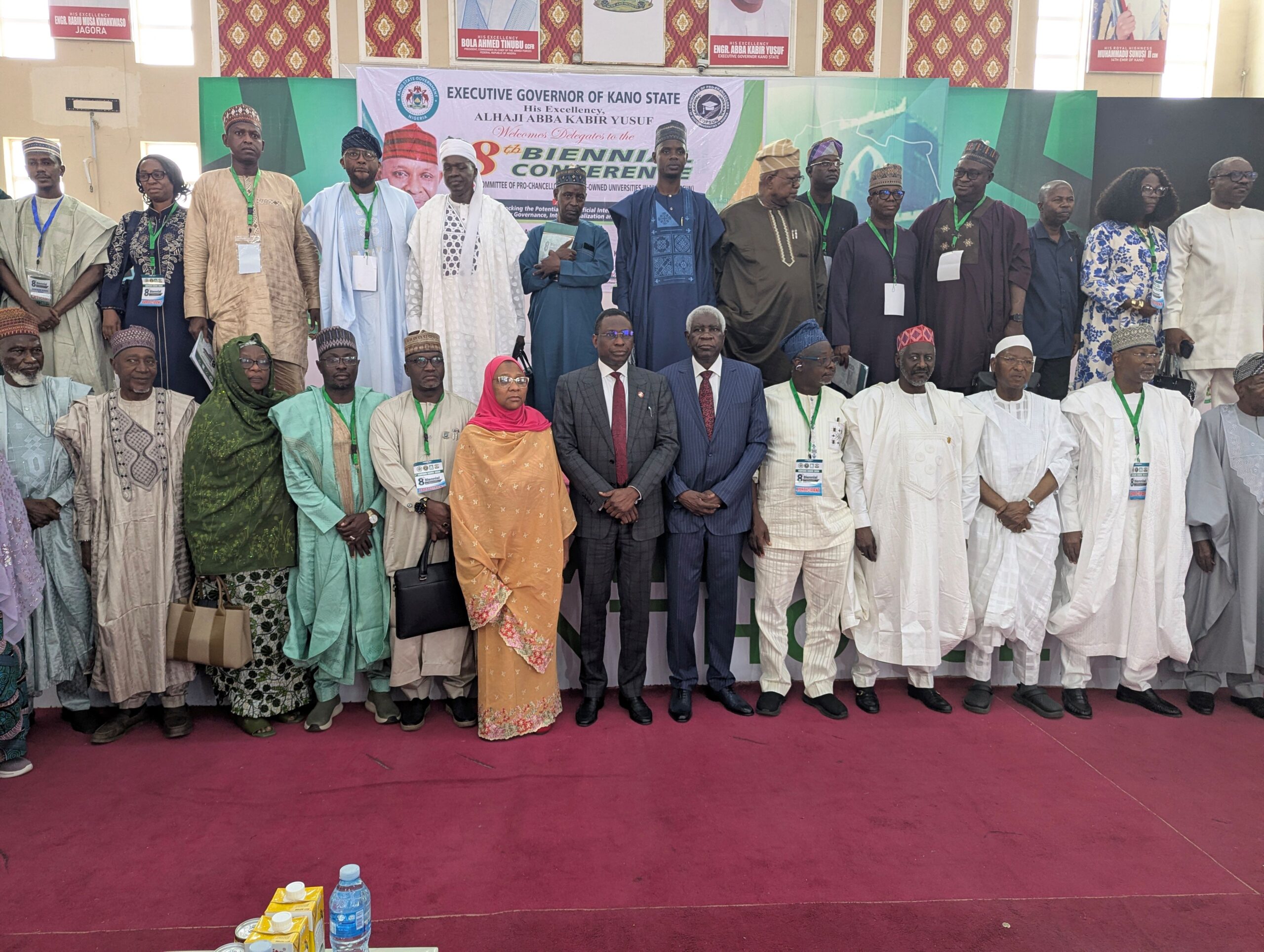
Describing AI as a “necessary defence,” the EFCC boss warned that the Nigerian university system cannot afford to be left behind in the global shift toward technology-driven governance.
The EFCC Chairman noted that Nigerian universities manage multi-billion-naira budgets, tuition fees, TETFund interventions, and research grants, yet accountability issues persist.
“The EFCC has investigated cases involving inflated contracts, ghost workers, and diverted students’ fees in tertiary institutions across the federation. Each case represents not only a loss of public funds but also a betrayal of the trust that Nigerian parents, students, and taxpayers have placed in the university system,” he said.
“A university that lacks financial accountability cannot credibly train future accountants and auditors, and one that tolerates fraud cannot produce the ethical professionals our economy needs. The university’s integrity is therefore a matter of national security, and AI offers transformative tools to defend it,” he added.
The anti-graft czar outlined specific areas where AI can strengthen ethical and financial management. These include fraud detection, automated auditing, payroll integrity, procurement oversight, and academic integrity.
He cited notable operations where AI proved decisive at the EFCC, such as “Operation Eagle Flush” (December 2024), during which the EFCC arrested 792 suspects, including 193 foreign nationals (114 Chinese, 40 Filipinos, two Kazakhs, one Pakistani, and one Indonesian), in a seven-storey building in Victoria Island, Lagos. The syndicate operated cryptocurrency investment fraud and romance scams targeting victims in the United States, Canada, Mexico, and Europe.
Olukoyede urged university governing councils to act decisively by adopting AI technologies in the day-to-day running of their systems.
“I recommend that you establish an AI and Digital Governance Committee within each governing council to drive responsible AI adoption. Create a Digital Integrity Strategy for finance, academics, and data protection within your institutions. Invest in digital infrastructure, broadband, cybersecurity, and cloud systems,” he said.
He also called for partnerships with the EFCC and other agencies for joint training and intelligence exchange, as well as the adoption of an AI Code of Ethics to safeguard privacy, prevent bias, and protect academic freedom.
Although Olukoyede emphasised the technological advantages AI tools can offer universities, he cautioned that technology alone is not sufficient.
“No matter how sophisticated the technology may be, its effectiveness ultimately depends on the integrity of the people who use it. AI will not work magic for the ivory towers if the integrity deficit among the workforce is not addressed,” he said.
He also warned of potential downsides, including over-reliance that could erode professional judgment, loss of institutional autonomy, and cybersecurity risks arising from weak data governance.
“The fight against corruption is a national project that depends on the integrity of every institution, especially our universities. The EFCC is ready to collaborate with you in training and intelligence sharing, in the unwavering belief that integrity will lead Nigeria to greatness and transparency. This is possible. It is achievable,” he said.
Dele Oyewale
Head, Media & Publicity
April 28, 2026
