
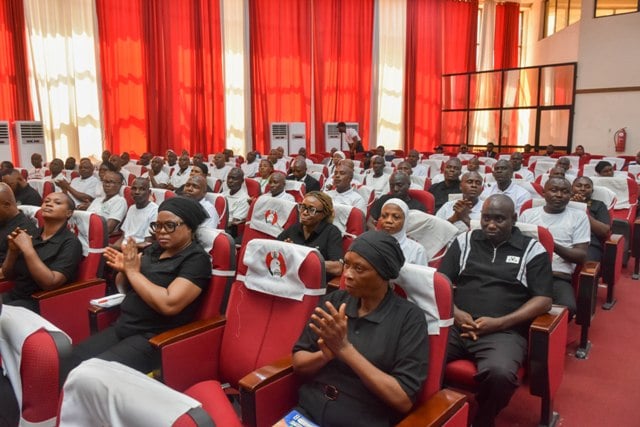
The Economic and Financial Crimes Commission (EFCC) on Monday, November 16, 2026, formally admitted 227 members of the management and senior staff of the Code of Conduct Bureau (CCB) into the EFCC Academy, Karu, Abuja, for a three-week capacity development programme.
Speaking at the flag-off ceremony, the Executive Chairman of the EFCC, Mr Ola Olukoyede, represented by the Acting Commandant of the EFCC Academy, Assistant Commander of the EFCC I, Joseph Ogwiji, said the training marked another significant milestone in the longstanding collaboration between the EFCC and the CCB.

“Your presence here represents another significant milestone in the longstanding collaboration between the EFCC and the CCB, both of which play critical roles in promoting integrity, accountability, transparency and good governance in Nigeria,” he said.
The Chairman of the CCB, Dr Abdullahi Usman Bello, thanked Olukoyede and the management and staff of the EFCC for their collaboration on staff development.

He said the decision to conduct the training at the EFCC Academy was informed by feedback from some CCB staff.
“The decision to train you here is as a result of feedback we got from some of you. Two things matter to us as a Board and these are, first, orientation. Many of you have served the CCB for a very long time, but the work at the CCB has changed, and the CCB is also changing.
“Here, I want you to be disciplined. I want us to have trained staff. Let us reset our thinking. So, it is not fair on you for us to be asking you to do a job you are not trained to perform. The second part is discipline, which is what makes knowledge useful,” he said.
Kenneth Ikpeme, a member of the CCB Board, emphasised the importance of regular capacity development for officers and urged the trainees to take advantage of the programme to improve their skills.

“My admonition to you now is that you take advantage of this exercise. Equip yourself because the task ahead of you is quite enormous,” he said.

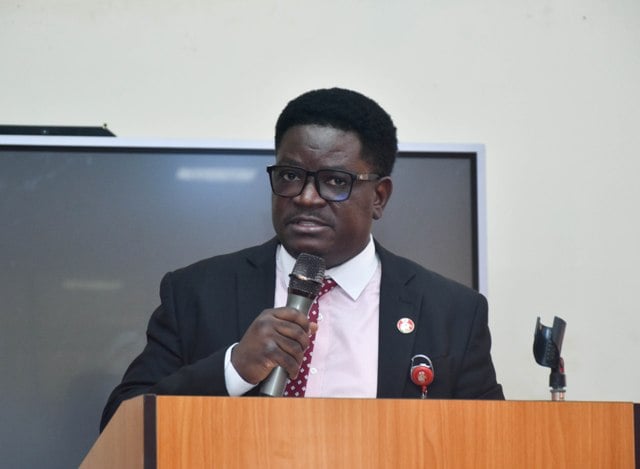

The training covers courses in leadership, advanced investigation and case management, forensic intelligence and digital evidence, asset tracing and recovery, financial analysis, among others.
